
Interactive Flat Panel vs Projector: 5-Year Cost Compared
Written by Milap Mehta, EdTech Specialist at Nitek IFP
Milap Mehta
Official Blog Contributor
Published on nitekifp.com | Reading time: 10 minutes | Smart Classrooms, Buying Guide, India
Every year, thousands of school administrators in India face the same choice. The budget has been approved, the classroom needs upgrading, and two options are sitting in front of them. A projector setup at a fraction of the upfront cost, or an interactive flat panel that costs significantly more on day one.
Most schools choose the projector because the number looks better in the proposal. And most of those schools quietly regret it by year three.
This article is not a brochure. It is a real cost comparison across five years, with actual rupee figures, covering everything that goes into owning and running a projector setup versus a Nitek interactive flat panel in an Indian school classroom. The upfront cost, the hidden costs, the maintenance costs, the replacement costs, and the productivity costs that nobody puts in a spreadsheet but every teacher feels every single day.
By the end of this article you will have a clear picture of what each option actually costs your school over five years. Not what the salesperson tells you. What the numbers actually show.
First, What Are We Comparing?
For this comparison we are looking at a standard Indian school classroom setup in each category.
The projector setup: a mid-range classroom projector from a reputable brand like Epson, BenQ or ViewSonic, a projection screen, a laptop or desktop to connect it, cables, ceiling mount, and installation. This is the standard classroom projector configuration that most Indian schools have been running for the past decade.
The interactive flat panel setup: a Nitek interactive flat panel in 75 inch size, wall mount, and installation. No separate laptop needed for basic teaching functions since the panel runs Android natively.
We are comparing a 75 inch equivalent display in both cases, and we are assuming the classroom runs six hours of daily use, five days a week, across a 220 day school year. That works out to approximately 1,320 hours of use per year.
Year One: The Upfront Investment
This is where the projector looks most attractive. And it is not wrong to notice the difference. The upfront numbers are genuinely different.
|
Item |
Projector Setup |
Nitek IFP Setup |
|
Main unit |
Rs 30,000 to Rs 60,000 |
Rs 1,00,000 to Rs 1,40,000 |
|
Projection screen |
Rs 5,000 to Rs 15,000 |
Not required |
|
Laptop or PC |
Rs 25,000 to Rs 40,000 |
Not required (built-in Android) |
|
Mount and installation |
Rs 5,000 to Rs 10,000 |
Rs 5,000 to Rs 15,000 |
|
Cables and accessories |
Rs 2,000 to Rs 5,000 |
Minimal |
|
Total Year One Cost |
Rs 67,000 to Rs 1,30,000 |
Rs 1,05,000 to Rs 1,55,000 |
On paper the projector wins year one. In some configurations the difference is Rs 20,000 to Rs 30,000. In others it is closer. But this is where most school procurement decisions end, and it is where they should actually begin.

The Cost Nobody Talks About: Projector Lamp Replacement
At 1,320 hours of annual use, a standard classroom projector lamp rated for 3,000 to 4,000 hours in normal mode will need its first replacement somewhere between year two and year three. In eco mode it might stretch to year three or four. But in a dusty Indian classroom with inconsistent ventilation, lamp life rarely reaches its rated specification.
A replacement lamp for a mid-range classroom projector from a brand like Epson, BenQ or ViewSonic costs between Rs 8,000 and Rs 20,000 in India depending on the model. This is not a small figure. For many schools it is an unbudgeted expense that arrives at an inconvenient time and causes the projector to sit unused for weeks while the purchase is approved and the part is sourced.
Over five years of classroom use at 1,320 hours per year, most schools will replace the projector lamp at least twice, sometimes three times. That is Rs 16,000 to Rs 60,000 in lamp costs alone, not counting the labour and downtime.
A Nitek interactive flat panel has no lamp. The LED backlight is rated for 50,000 hours. At 1,320 hours of annual use that is over 37 years of backlight life. In practice the panel will be replaced for other reasons long before the backlight ever becomes an issue. The lamp replacement cost for a Nitek interactive flat panel over five years is exactly zero.
|
A projector lamp replacement in India is not just a cost. It is a process. A requisition has to be raised, the purchase approved, the correct lamp sourced, and a technician called in. In most government schools and many private schools, this process takes two to six weeks. During that time the classroom is without its primary display technology. A Nitek interactive flat panel eliminates this problem entirely. |
Annual Maintenance and Service Costs
Projectors require regular maintenance that interactive flat panels simply do not. Air filters need cleaning every one to two months in dusty environments, which describes most Indian classrooms. The projection lens needs periodic cleaning. Alignment and focus drift over time and need recalibration. Ceiling mounted projectors are particularly prone to dust accumulation because heat draws air upward through the body of the unit.
These are not catastrophic maintenance events but they add up. A conservative estimate for annual projector maintenance in an Indian school, including filter cleaning, periodic service calls, and minor repairs, is Rs 2,000 to Rs 5,000 per year. Over five years that is Rs 10,000 to Rs 25,000.
A Nitek interactive flat panel requires a microfibre cloth and five minutes at the end of the school day. The ventilation slots need clearing every few months with a can of compressed air. There are no moving parts, no filters, no lenses, no alignment to maintain. Annual maintenance cost for a Nitek interactive flat panel in a standard school environment is essentially zero beyond the cost of a microfibre cloth.
Electricity Consumption
A standard classroom projector with a bright enough lamp for Indian classroom conditions, which typically requires 3,000 lumens or more to compensate for ambient light, consumes between 250 and 350 watts during operation.
A Nitek interactive flat panel 75 inch consumes approximately 180 to 220 watts during normal operation. The difference per hour is roughly 70 to 130 watts. At Indian commercial electricity rates of approximately Rs 8 to Rs 12 per unit and 1,320 hours of annual use, this works out to a saving of Rs 740 to Rs 2,050 per year in electricity costs. Over five years that is Rs 3,700 to Rs 10,250 in electricity savings.
This is not the biggest number in this comparison but it is a real one and it compounds. Schools running 10 or more classrooms will feel this difference meaningfully.
The Hidden Cost: Ambient Light and Window Blinds
This is one that almost never appears in a cost comparison but every school that has run projectors knows exactly what we are talking about.
A projector image fades over time. A new projector lamp at 3,000 lumens looks acceptable in a normally lit classroom. By year two, as the lamp degrades, the image requires curtains or blinds to be drawn for students to see clearly. Schools in coastal regions like Karnataka, or sun-facing classrooms in Rajasthan and Gujarat, struggle with this from year one.
The result is that schools running projectors either tolerate a washed-out image, which affects learning, or they invest in heavy blackout blinds for every classroom, which can cost Rs 3,000 to Rs 8,000 per classroom and creates an unpleasant learning environment. Neither option is good.
A Nitek interactive flat panel at 400 plus nits brightness is designed to be clearly visible in normally lit Indian classrooms, including rooms with windows open and natural light coming in. No blinds required. No curtains needed. The classroom stays bright and students can see the board clearly regardless of time of day or season.
The Five Year Total Cost Comparison
Putting it all together across five years of classroom operation at 1,320 hours of annual use:
|
Cost Component |
Projector Setup (5 years) |
Nitek IFP (5 years) |
|
Initial purchase and installation |
Rs 67,000 to Rs 1,30,000 |
Rs 1,05,000 to Rs 1,55,000 |
|
Lamp replacements (2 to 3 times) |
Rs 16,000 to Rs 60,000 |
Rs 0 |
|
Annual maintenance and service |
Rs 10,000 to Rs 25,000 |
Rs 0 to Rs 2,000 |
|
Additional electricity cost |
Rs 3,700 to Rs 10,250 more |
Baseline |
|
Blinds or curtains (if needed) |
Rs 3,000 to Rs 8,000 |
Rs 0 |
|
Total 5-Year Cost |
Rs 99,700 to Rs 2,33,250 |
Rs 1,05,000 to Rs 1,57,000 |
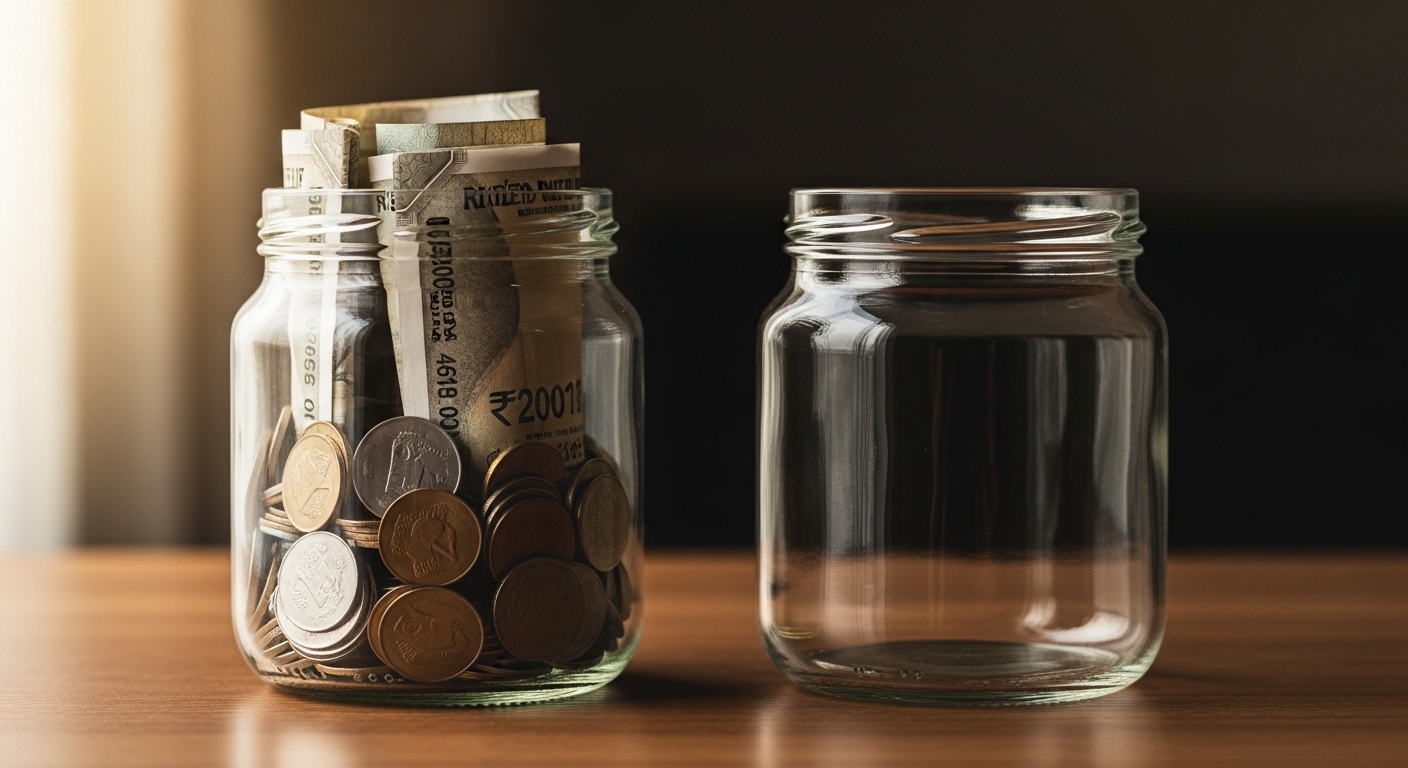
The numbers tell a story that is the opposite of what most school purchase committees assume. The projector setup that looks cheaper on day one costs more by year three in most cases and significantly more by year five. The Nitek interactive flat panel that looks expensive on day one becomes the lower cost option over any meaningful period of operation.
|
For a school deploying 10 classrooms, the five year total cost difference between projector setups and Nitek interactive flat panels can be Rs 5 lakh to Rs 15 lakh in Nitek's favour. That is money that stays in the school budget for infrastructure, books, or the next phase of classroom upgrades. |
What the Numbers Do Not Capture
The cost comparison above is based on rupee figures that can be verified and tracked. But there are real costs that do not appear in any budget spreadsheet that are worth naming.
Teacher time lost to setup and troubleshooting
A teacher who spends five to ten minutes every morning setting up a projector, adjusting focus, connecting a laptop, and dealing with the occasional technical failure is losing instructional time that cannot be recovered. Across a 220 day school year that is between 18 and 37 hours of teaching time lost to setup. A Nitek interactive flat panel switches on in under 60 seconds. The difference is not trivial.
Display quality and student outcomes
A fading projector image in a bright classroom is not just an aesthetic problem. Students in the back rows cannot read what is on the board clearly. Teachers compensate by reducing text size or skipping visual content. The quality of instruction suffers in ways that are real but difficult to put a number on.
A Nitek interactive flat panel maintains consistent 4K display quality from day one to year five and beyond. Every student in every row can see everything on the screen clearly regardless of ambient light conditions.
Touch and interactivity
A projector, even an interactive one, cannot match the touch experience of a Nitek interactive flat panel. Projector based interactive systems require calibration that drifts. Shadow interference when a teacher or student stands in front of the projected image is a constant frustration. The infrared touch on a Nitek interactive flat panel responds accurately to fingers and stylus anywhere on the screen without calibration, without shadows, and without lag.
When Does a Projector Still Make Sense?
We believe in honest comparisons and the honest answer is that a projector still makes sense in some situations.
If a school needs to cover a very large surface area, above 200 inches equivalent, for an auditorium or hall, a projector is still a more practical option than multiple panels or a prohibitively large display.
If the budget genuinely cannot accommodate an interactive flat panel even at Nitek's price point and the choice is between a projector and nothing, a projector is better than nothing.
If the classroom is used only occasionally, less than two hours per day, the five year math changes and the projector may remain competitive.
Outside these specific situations, the total cost of ownership over five years consistently favours an interactive flat panel over a projector setup, and the quality of daily use favours it even more strongly.
The Bottom Line
The question Indian schools should be asking is not which option is cheaper to buy. It is which option costs less to own and delivers more value over the time it is in the classroom.
On that question the answer is clear. A Nitek interactive flat panel costs more on day one and less across every year that follows. It requires less maintenance, delivers better display quality, gives teachers more instructional time, and eliminates the recurring expense and operational disruption of lamp replacements.
The projector that saves you Rs 30,000 today will cost you more than that in lamps, maintenance, and lost teaching time before the end of year three.
If you are making this decision for your school right now, visit nitekifp.com to get current pricing on Nitek interactive flat panels in 65, 75, 86 and 98 inch sizes, or contact the Nitek team directly to discuss the right configuration for your classrooms.